
Almost every parent has watched their little one settle down with a thumb in the mouth — it is one of the most natural, comforting habits of early childhood. In most children it fades on its own and does no harm at all. But when thumb-sucking carries on past a certain age, it can start to push the teeth out of line and change the shape of the growing jaw. If you are searching for help with thumb-sucking treatment for your child in Delhi, here is a clear, no-panic guide to when it matters, how it affects the teeth, and the gentle ways we help children stop.
Is Thumb-Sucking Normal? When Should Parents Worry?
Yes — thumb-sucking is completely normal for babies and toddlers. It is a natural reflex that helps them feel secure, calm and ready for sleep. Most children give it up on their own between 2 and 4 years of age, and if the habit stops in this window, it rarely causes any lasting damage.
The time to pay closer attention is when thumb-sucking continues beyond age 4-5, or once the permanent front teeth start coming in (around age 6). At that stage, the constant pressure of the thumb against the teeth and palate can begin to cause real changes. Watch out for these warning signs:
- Sucking that is frequent, forceful or intense rather than gentle and occasional.
- Front teeth that are starting to tip outward or stick out.
- A visible gap between the upper and lower front teeth even when the mouth is closed.
- Changes in speech, such as a lisp, or difficulty biting into food.
How Thumb-Sucking Affects Your Child’s Teeth & Bite
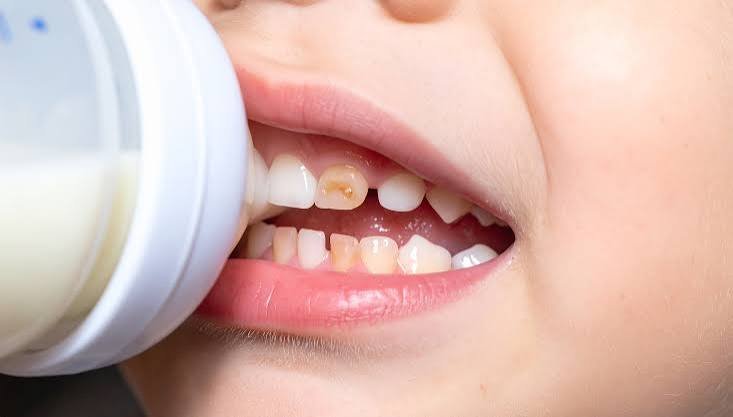
When a child sucks their thumb over months and years, they apply a steady outward and upward force on the developing mouth. Because a young child’s jawbone is soft and still growing, this pressure can slowly reshape it. The most common effects dentists see are:
- Open bite: The upper and lower front teeth don’t meet, leaving an oval gap even when the back teeth are closed together.
- Buck teeth (overjet): The upper front teeth are pushed forward and outward, giving that “sticking out” look.
- Narrow, high palate: The thumb presses on the roof of the mouth, narrowing the upper arch and sometimes causing a crossbite.
- Speech & eating issues: An open bite can make it harder to pronounce certain sounds or bite cleanly into food.
The good news: the earlier the habit stops, the more the mouth can correct itself naturally as the child grows. That is exactly why timing matters.
The Right Age to Step In
If your child has naturally stopped by age 4, there is usually nothing to do — just keep up regular dental check-ups. Active help is worth considering when the habit continues past age 4-5, and it becomes important once the permanent front teeth erupt around age 6, since damage from this point is more likely to stick.
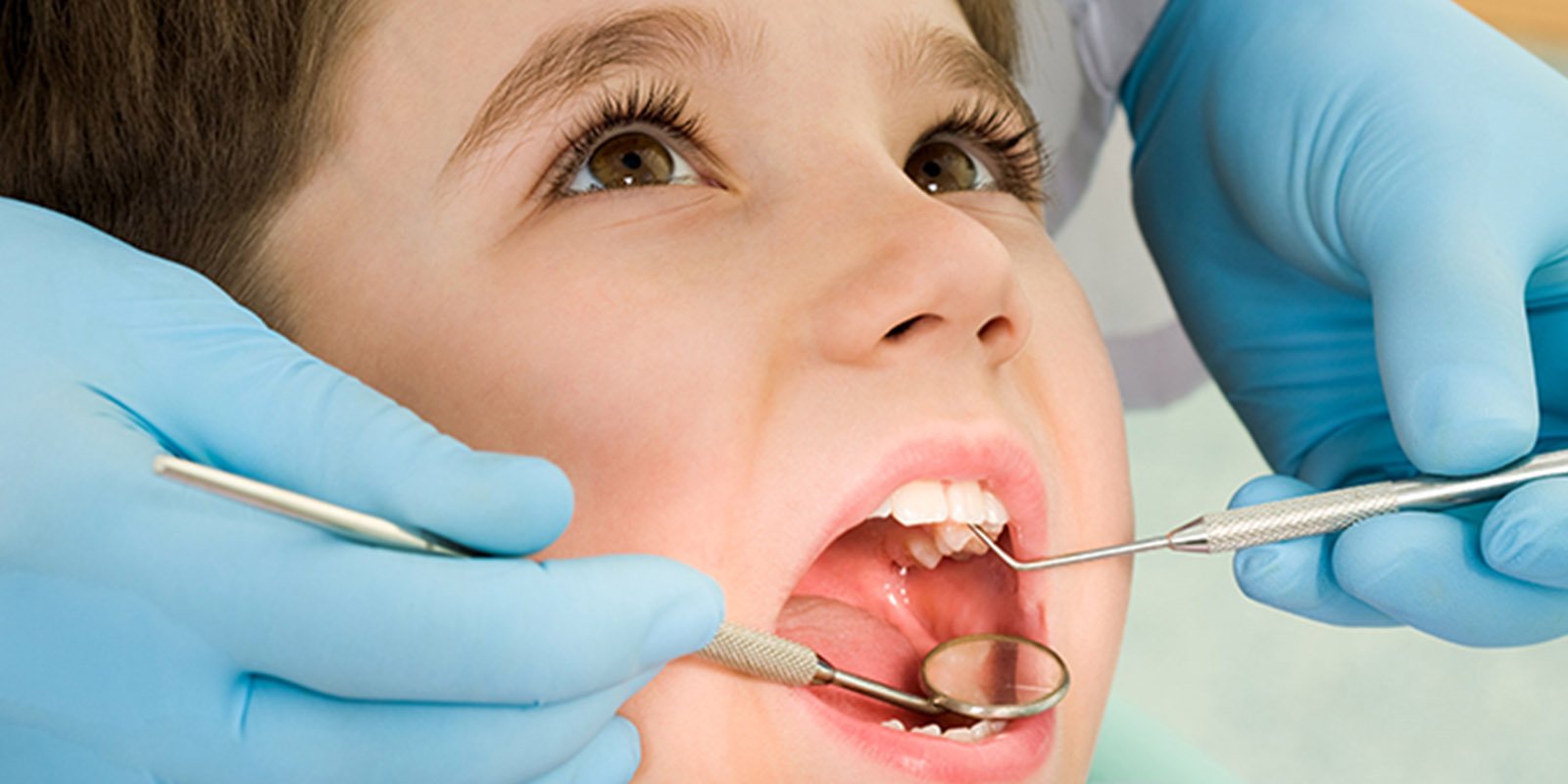
A simple way to stay ahead of any problem is to bring your child in for their first dental visit early and keep to routine appointments. During these visits we monitor how the teeth and jaw are developing and can flag a habit before it does lasting harm — read our guide on when a child should visit the dentist to plan the timing.
Gentle Ways to Help Your Child Stop at Home
Most children respond best to patience and encouragement, not pressure. Scolding or punishing usually backfires, because thumb-sucking is a comfort habit — shame only makes a child more anxious and more likely to reach for the thumb. Try these positive approaches first:
- Praise, don’t punish: Notice and reward the times your child is not sucking, with a hug, a sticker or a small reward chart.
- Find the trigger: Many children suck when tired, bored or upset. Offer a comfort object — a soft toy or blanket — to soothe them instead.
- Gentle reminders: A calm, kind reminder during the day (never a telling-off) helps an older child who genuinely wants to stop.
- Involve your child: Explain simply that big teeth need protecting. Children who decide for themselves to stop are far more successful.
- Cover the cue at night: A soft mitten or sock over the hand at bedtime can gently break the automatic night-time habit.
Dental Treatments for Persistent Thumb-Sucking
When home methods aren’t enough and the habit is affecting the teeth, we can help with simple, child-friendly dental options. These are painless and designed to gently interrupt the habit rather than punish it:
- Habit-reminder appliance (tongue crib / palatal crib): A small fixed device behind the upper teeth that removes the pleasant sensation of sucking, so the habit naturally loses its appeal. It is not uncomfortable — most children forget it is there within days.
- Removable habit-breaker: A gentler, take-out option for cooperative, motivated children.
- Orthodontic correction later: If the bite has already shifted, we can plan braces or aligners once the child is older to bring the teeth back into place. For teens, we also offer Invisalign for kids.
Here is a rough guide to what thumb-sucking treatment costs in Delhi (the final figure depends on the appliance and your child’s needs):
| Treatment | Approx. Cost |
|---|---|
| Consultation & habit assessment | ₹300 – ₹500 |
| Fixed habit-breaking appliance (tongue crib) | ₹4,000 – ₹8,000 |
| Removable habit-breaker | ₹3,000 – ₹6,000 |
| Later orthodontic correction (braces/aligners) | ₹25,000 onwards |
Prices are indicative for 2026 and may vary. Contact us for an exact quote after a quick check-up.
Why Choose North Delhi Dental Clinic for Your Child
A child’s early dental experiences shape how they feel about the dentist for life. At North Delhi Dental Clinic in Model Town, we make every visit calm, gentle and reassuring for both children and parents:
- Led by Dr. Ankita Jindal Poddar — BDS with 15+ years of experience and a warm, patient way with nervous children.
- No-fear, child-friendly environment — we take the time to make your child comfortable, never rushed or frightened.
- Complete kids’ care under one roof — habit assessment, habit-breaking appliances, preventive care and orthodontics.
- Rated 4.8★ by 160+ happy families across North Delhi.
Worried about your child’s habit or overall dental development? Learn more about our approach to child specialist dental care in Delhi, or simply book a friendly check-up and let us take a look.
Worried About Your Child’s Thumb-Sucking?
Book a gentle assessment with Dr. Ankita at North Delhi Dental Clinic, Model Town-3.
Frequently Asked Questions
At what age should I worry about my child’s thumb-sucking?
Thumb-sucking is normal in babies and toddlers and most children stop on their own by age 2-4. It is worth stepping in if the habit continues past age 4-5, and it becomes important once the permanent front teeth come in around age 6, as damage from that point is more likely to be lasting.
Can thumb-sucking really damage my child’s teeth?
Yes, if it continues for a long time. Constant pressure from the thumb can push the front teeth outward, create an open bite where the teeth don’t meet, and narrow the roof of the mouth. The earlier the habit stops, the more the mouth can correct itself as the child grows.
How can I get my child to stop sucking their thumb?
Positive encouragement works best — praise and reward times when your child isn’t sucking, identify triggers like tiredness or boredom, and involve your child in the decision to stop. Avoid scolding, as it usually makes the habit worse. If home methods don’t work, a dentist can help.
What is a thumb-sucking appliance and does it hurt?
A habit-breaking appliance, such as a tongue crib, is a small device fitted behind the upper teeth that gently removes the comforting sensation of sucking, so the habit naturally fades. It does not hurt — most children forget it is there within a few days.
How much does thumb-sucking treatment cost in Delhi?
A habit assessment consultation is usually around ₹300-₹500. A fixed habit-breaking appliance typically costs ₹4,000-₹8,000, and a removable one ₹3,000-₹6,000. If the bite already needs correcting, orthodontic treatment starts from around ₹25,000. Costs vary with your child’s specific needs.

Dr. Ankita Jindal Poddar
BDS, 15+ years of experience | IDA Member | Ex-Hindu Rao Hospital | Certificate of Implantology. Dr. Ankita leads North Delhi Dental Clinic in Model Town-3, Delhi, offering gentle, family-friendly dental care with a special focus on children’s preventive dentistry.
📍 D-2/2, Model Town-3, Delhi 110009 | 📞 +91 98106 35405