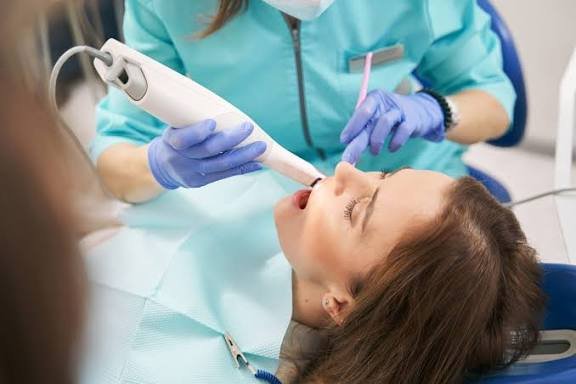
If you have ever needed a dental crown, a bridge or braces, you probably remember the moment the dentist pushed a tray full of cold, sticky putty into your mouth and asked you to hold still while it set — often fighting the urge to gag. For decades that was the only way to take a “mould” of your teeth. Today there is a far better option: a digital intraoral scanner that captures your teeth in 3D with a small wand — no tray, no putty, no gagging. If you are wondering about intraoral scanner vs traditional putty impressions, here is a clear comparison of how they differ, why digital is more comfortable and accurate, and what it means for your treatment in Delhi.
What Is a Traditional Putty Impression?
A traditional impression uses a soft putty-like material loaded into a tray. The tray is placed over your teeth and held in the mouth for a few minutes while the material hardens into a mould. That mould is then sent to a dental lab, where a plaster model of your teeth is poured and used to make your crown, bridge or aligners. It works — but it can be uncomfortable, messy, and if the material distorts, tears or captures a bubble, the whole impression has to be retaken.
What Is an Intraoral Scanner (Digital Impression)?
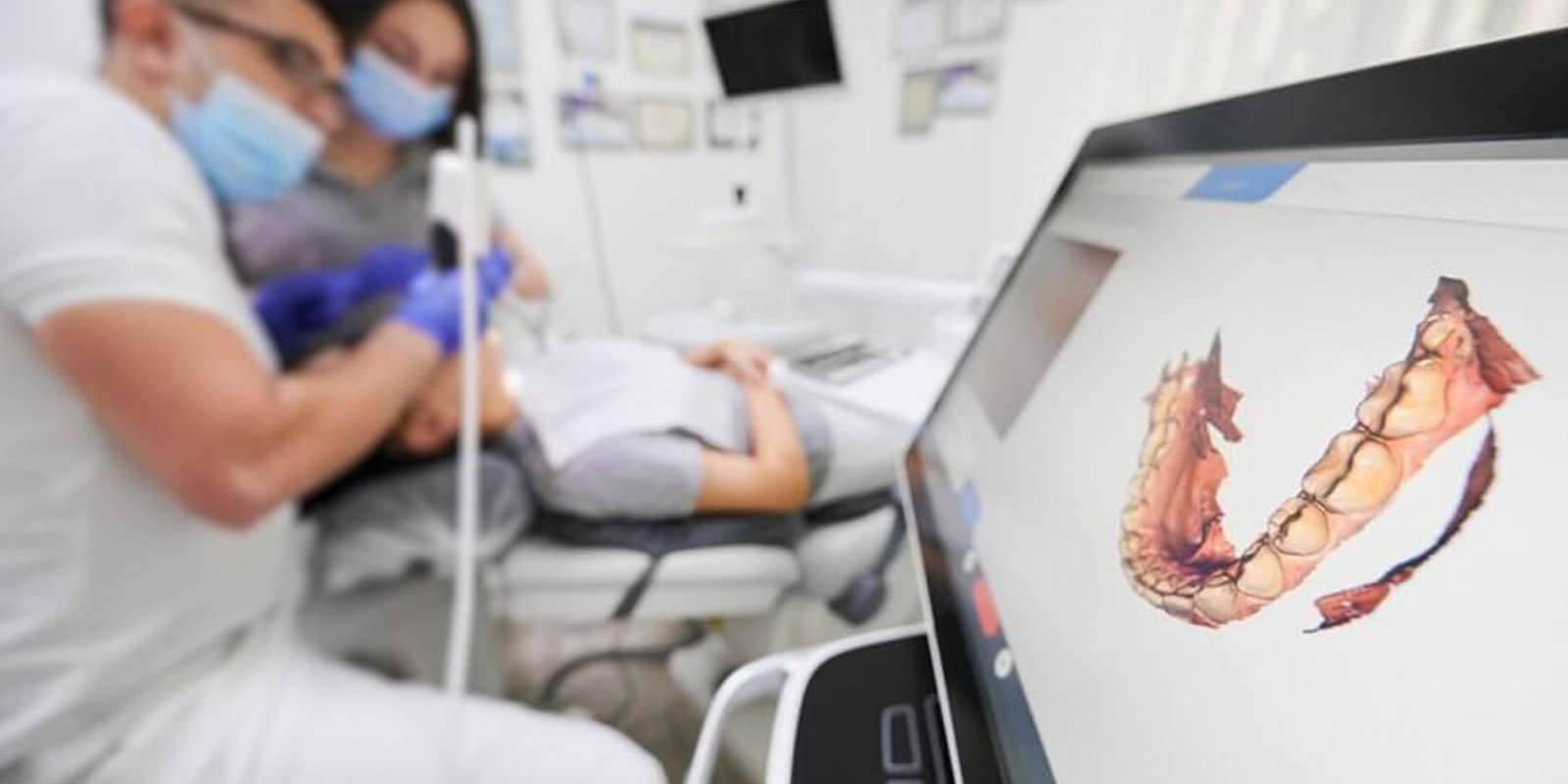
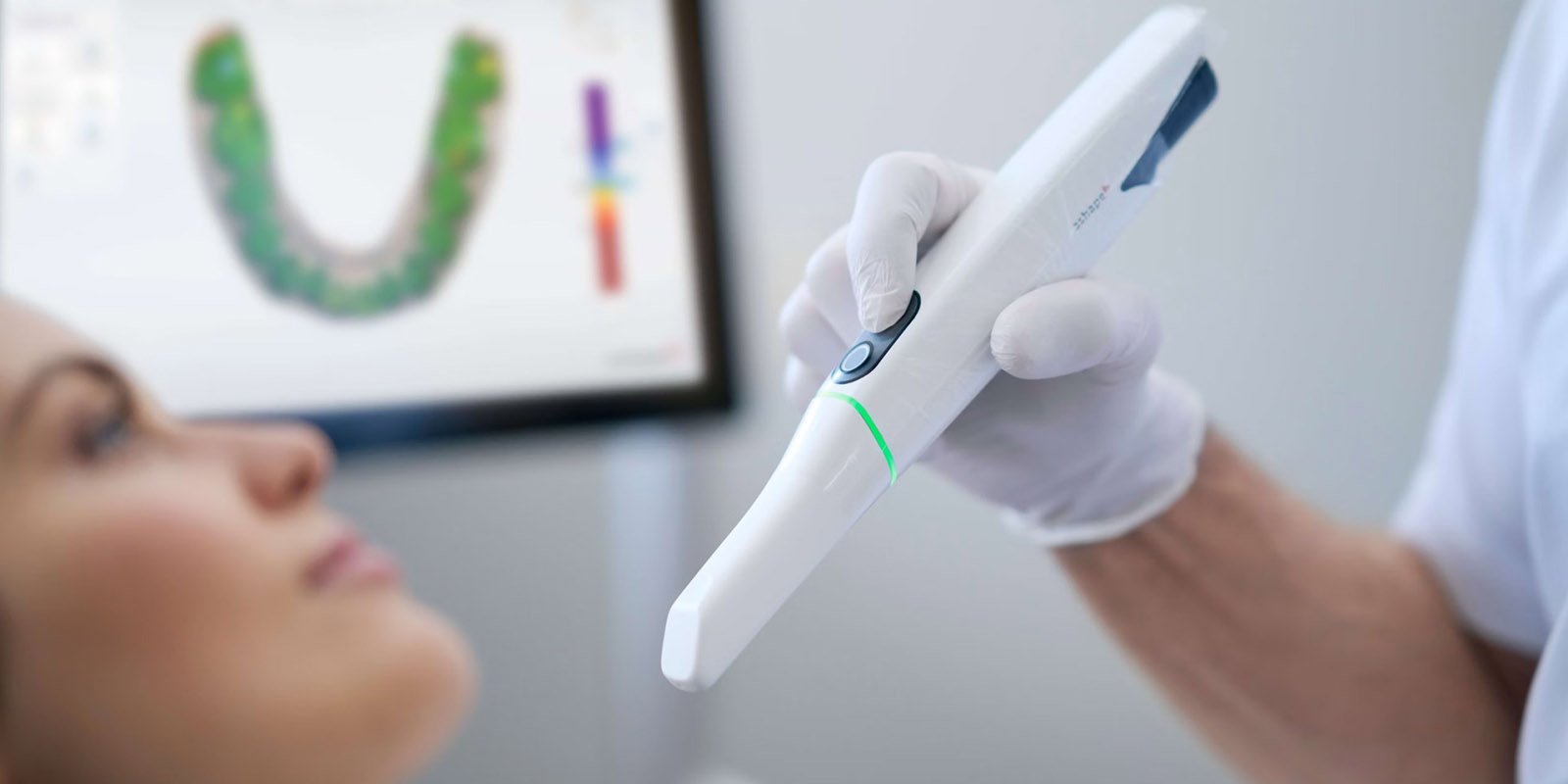
An intraoral scanner is a small, pen-shaped wand with a camera at its tip. The dentist gently moves it over your teeth, and within a couple of minutes it builds a highly accurate 3D digital model of your mouth on a screen — no tray and nothing to bite into. That digital file is sent straight to the lab electronically, skipping the messy mould entirely. You even get to see your own teeth in 3D on the monitor as the scan is taken.
Intraoral Scanner vs Putty Impression — Side by Side
| Feature | Digital Intraoral Scanner | Traditional Putty |
|---|---|---|
| Comfort | No tray, no gag reflex | Bulky tray, can trigger gagging |
| Mess | None — fully digital | Sticky material in the mouth |
| Accuracy | Very high, no distortion | Can distort, tear or trap bubbles |
| If a bit is missed | Re-scan just that spot instantly | Retake the whole impression |
| Speed to lab | Sent electronically at once | Physical mould couriered to lab |
| Record keeping | Stored digitally, easy to reuse | Physical model can wear or break |
Why Digital Impressions Are More Comfortable
For most patients, comfort is the biggest difference. There is no large tray, no thick material pressing on the palate, and nothing that triggers the gag reflex — a huge relief if you have ever struggled through a putty impression. It is especially valuable for children, anxious patients, and anyone with a strong gag reflex. The scan can be paused and restarted at any time, so you stay in control and comfortable throughout.
More Accurate = Better-Fitting Results
Accuracy is not just about comfort — it directly affects how well your final crown, bridge or aligner fits. Because a digital scan captures fine detail without the distortion, bubbles or tearing that can affect putty, the lab works from a near-perfect model. That usually means a better-fitting restoration, fewer adjustments, and fewer repeat visits. And if a small area needs re-capturing, the dentist simply re-scans that spot in seconds instead of starting the whole impression again.
What Are Digital Impressions Used For?
- Crowns & bridges: A precise scan means a natural, well-fitting cap the first time.
- Clear aligners & braces: Digital scans are ideal for planning braces and aligners and tracking tooth movement.
- Dental implants: Accurate models help design implant crowns that fit perfectly — see dental implants in Delhi.
- Night guards & retainers: Custom-fit appliances made from an exact digital model.
Learn more about how digital impressions work and why they save time and mess.
Does a Digital Scan Cost More?
Not usually. At most clinics, a digital scan is simply part of the treatment — the same crown, aligner or implant, taken with a more comfortable, accurate method. In fact, by reducing distorted impressions and ill-fitting restorations, digital scanning often saves time and repeat appointments. Any final cost depends on the treatment itself (the crown, aligner or implant), not on how the impression is captured.
Digital Impressions at North Delhi Dental Clinic
Good news for our patients — this technology is available right here at North Delhi Dental Clinic in Model Town, and we use it as a regular part of your care. With digital impressions in-house, your visit is faster, cleaner and more comfortable — with results that fit better. Beyond taking impressions, we also use the intraoral scanner as a diagnostic tool: the magnified 3D images let us spot early problems such as cracks, worn enamel, decay between teeth or gum changes, show them to you clearly on the screen, and compare your teeth over time — so issues are caught early and your treatment is planned with confidence.
- Led by Dr. Ankita Jindal Poddar — BDS with 15+ years of experience, IDA Member, Ex-Hindu Rao Hospital, Certificate of Implantology.
- No-mess, no-gag scanning — comfortable for kids, nervous patients and strong gag reflexes.
- Precise, technology-led care — better-fitting crowns, aligners and implants with fewer repeat visits.
- Rated 4.8★ by 130+ patients across North Delhi.
Skip the Messy Putty — Try Digital Scanning
Book a comfortable, no-mess digital impression at North Delhi Dental Clinic, Model Town-3.
Frequently Asked Questions
Are digital impressions as accurate as putty impressions?
Yes — in most cases they are more accurate. A digital scan captures fine detail without the distortion, tearing or trapped bubbles that can affect putty, so the lab works from a near-perfect 3D model. This usually means a better-fitting crown, aligner or implant with fewer adjustments.
Does an intraoral scan hurt or make me gag?
No. The scanner is a small wand that glides over your teeth — there is no tray and nothing to bite into, so it does not trigger the gag reflex the way putty can. It is especially comfortable for children, anxious patients and anyone with a strong gag reflex.
How long does a digital impression take?
Usually just a few minutes per arch. The dentist moves the wand over your teeth and a 3D model builds on the screen in real time. It is often quicker than waiting for putty material to set, and the file goes to the lab instantly.
Is a digital scan more expensive than a putty impression?
Generally no. The scan is part of your treatment, so the cost depends on the crown, aligner or implant itself, not on how the impression is taken. Digital scanning can even reduce costs by avoiding redone impressions and ill-fitting restorations.
What treatments use digital impressions?
They are used for crowns, bridges, clear aligners and braces, implant restorations, night guards and retainers — essentially anything that once needed a putty mould. A single quick scan can serve several of these treatments.

Dr. Ankita Jindal Poddar
BDS, 15+ years of experience | IDA Member | Ex-Hindu Rao Hospital | Certificate of Implantology. Dr. Ankita leads North Delhi Dental Clinic in Model Town-3, Delhi, offering precise, technology-led dental care including crowns, aligners and implants.
📍 D-2/2, Model Town-3, Delhi 110009 | 📞 +91 98106 35405