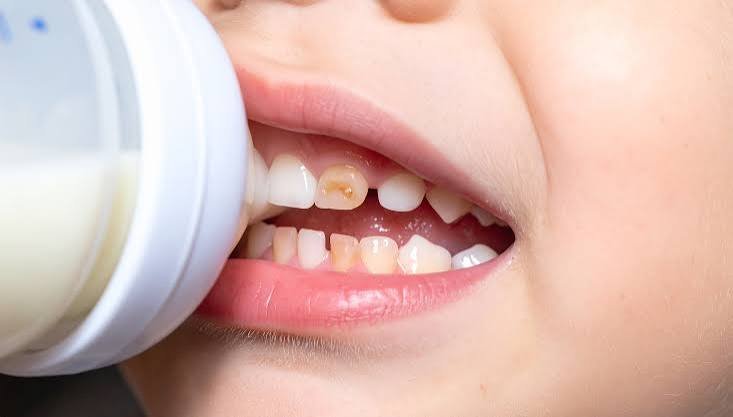
Most parents know that sweets cause cavities — but very few realise that the biggest culprit for a toddler’s rotting front teeth is often the bedtime milk bottle itself. Here is what happens: you feed your child milk (often with sugar, Bournvita or Horlicks), or juice, and they drift off to sleep with the bottle still in their mouth. Nobody wipes the teeth or rinses the mouth afterwards, so that sweet milk pools around the front teeth for hours every single night. Bacteria feast on the sugar, produce acid, and slowly the enamel dissolves. This is baby bottle tooth decay — and if you are searching for its causes, prevention or treatment in Delhi, this parent’s guide covers everything you need to know.
What Is Baby Bottle Tooth Decay?
Baby bottle tooth decay — also called Early Childhood Caries or “nursing bottle caries” — is tooth decay that affects infants and toddlers, usually on the upper front teeth. It happens when a young child’s teeth are exposed to sugary liquids for long periods, especially at night. Many parents assume baby teeth “don’t matter because they fall out anyway” — but decayed baby teeth cause real pain, trouble eating, and can damage the permanent teeth forming underneath. They also hold space for adult teeth, so losing them early can crowd the future smile.
Why It Happens — The Bedtime Bottle Trap
This is the part most parents miss. When your child is awake, saliva constantly washes sugar and acid off the teeth. But during sleep, saliva flow almost stops. So if a child falls asleep with a bottle of milk or juice, that sugary liquid sits undisturbed against the teeth for the whole night — with no saliva and no rinsing to clean it away. Do this every night and decay is almost guaranteed. Here is the important part: you do not need to stop night feeds. Feeding your baby at night — by bottle, by water, or by breastfeeding — is a normal, loving part of raising a child. What truly matters is what you do after the feed: always clean the mouth so milk is never left sitting on the teeth overnight.
The One Habit That Protects Your Child: Clean After Every Feed
If you remember only one thing from this guide, let it be this — gently clean your child’s mouth after every feed, day or night. It takes just a few seconds and it is the single most effective way to prevent baby bottle tooth decay:
- After milk feeds: give a few sips of plain water, or wipe the teeth and gums with a clean, damp cloth or piece of gauze.
- After water feeds too: water itself is safe, but wiping after every feed keeps the routine consistent — so it is never accidentally skipped after a milk feed.
- Breastfed babies too: breast milk also contains natural sugars, so wipe the gums and any teeth after night nursing, exactly as you would after a bottle.
- Even before teeth appear: from the very first weeks, wipe your baby’s gums with a soft, damp cloth after feeds — it clears milk residue and builds the habit early.
The goal is simple: feed your child freely and lovingly, but never let milk stay on the teeth for hours. Clean after every feed, and you remove the very cause of early decay.
Everyday Habits That Cause It
In Indian homes, several common routines quietly speed up early decay:
- Milk left on the teeth overnight: Feeding at night is perfectly fine — the harm comes when the mouth is not wiped or rinsed afterwards, so milk pools on the teeth for hours.
- Sweetened milk: Adding sugar, Bournvita, Horlicks or honey to every feed.
- Sipping all day: A bottle of juice or sweet drink the child carries around for hours.
- Dipping the soother: Dipping a pacifier or spoon in sugar, honey or gur to calm the baby.
- No cleaning after feeds: Not wiping the gums or brushing, so sugar is never removed.
It is rarely one big mistake — it is these small daily habits adding up night after night.
Early Warning Signs Parents Should Watch For
Caught early, baby bottle tooth decay can often be stopped or reversed. Look for these signs on your child’s teeth, especially the upper front ones:
- Chalky white lines or spots near the gum line — the very first stage.
- Yellow or brown patches as decay advances.
- Black or broken-down front teeth in more severe cases.
- Sensitivity or pain while eating, or fussiness during feeds.
If you spot white or brown marks, don’t wait — it is far easier and cheaper to treat at the white-spot stage. Learn more about the early signs of tooth decay.
How to Prevent Baby Bottle Tooth Decay
The good news is that this is one of the most preventable dental problems. A few simple habits protect your child’s smile:
- Clean after every feed — the golden rule. After milk, water or breastfeeding, give a few sips of plain water or wipe the teeth and gums with a clean, damp cloth. Never let milk stay on the teeth overnight.
- Settle with water, not a sugary bottle. If your child needs a bottle to fall asleep, fill it with plain water instead of milk or juice.
- Cut the sugar. Avoid adding sugar/honey to milk, and don’t dip soothers in anything sweet.
- Start brushing early. As soon as the first tooth appears, brush twice daily with a tiny smear of fluoride toothpaste.
- Move to a cup. Encourage drinking from a cup from around age one to reduce bottle time.
- Use fluoride. A professional fluoride application for kids strengthens young enamel against acid attacks.
Treatment Options in Delhi
If decay has already started, the treatment depends on how far it has gone — which is why an early visit matters so much. At North Delhi Dental Clinic we treat little ones gently, and the options range from simple to more involved:
| Treatment | When It’s Needed | Approx. Cost |
|---|---|---|
| Fluoride application | Early white-spot stage | ₹800 – ₹1,500 |
| Tooth-coloured filling | Small to moderate cavity | ₹1,000 – ₹2,000 / tooth |
| Pulp therapy (baby root canal) | Decay reaching the nerve | ₹3,000 – ₹5,000 / tooth |
| Kids’ crown / cap | Badly broken-down tooth | ₹2,500 – ₹4,000 / tooth |
Prices are indicative for 2026 and vary with the number of teeth and severity. Contact us for an exact quote after a quick check-up.
Why Choose North Delhi Dental Clinic for Your Child
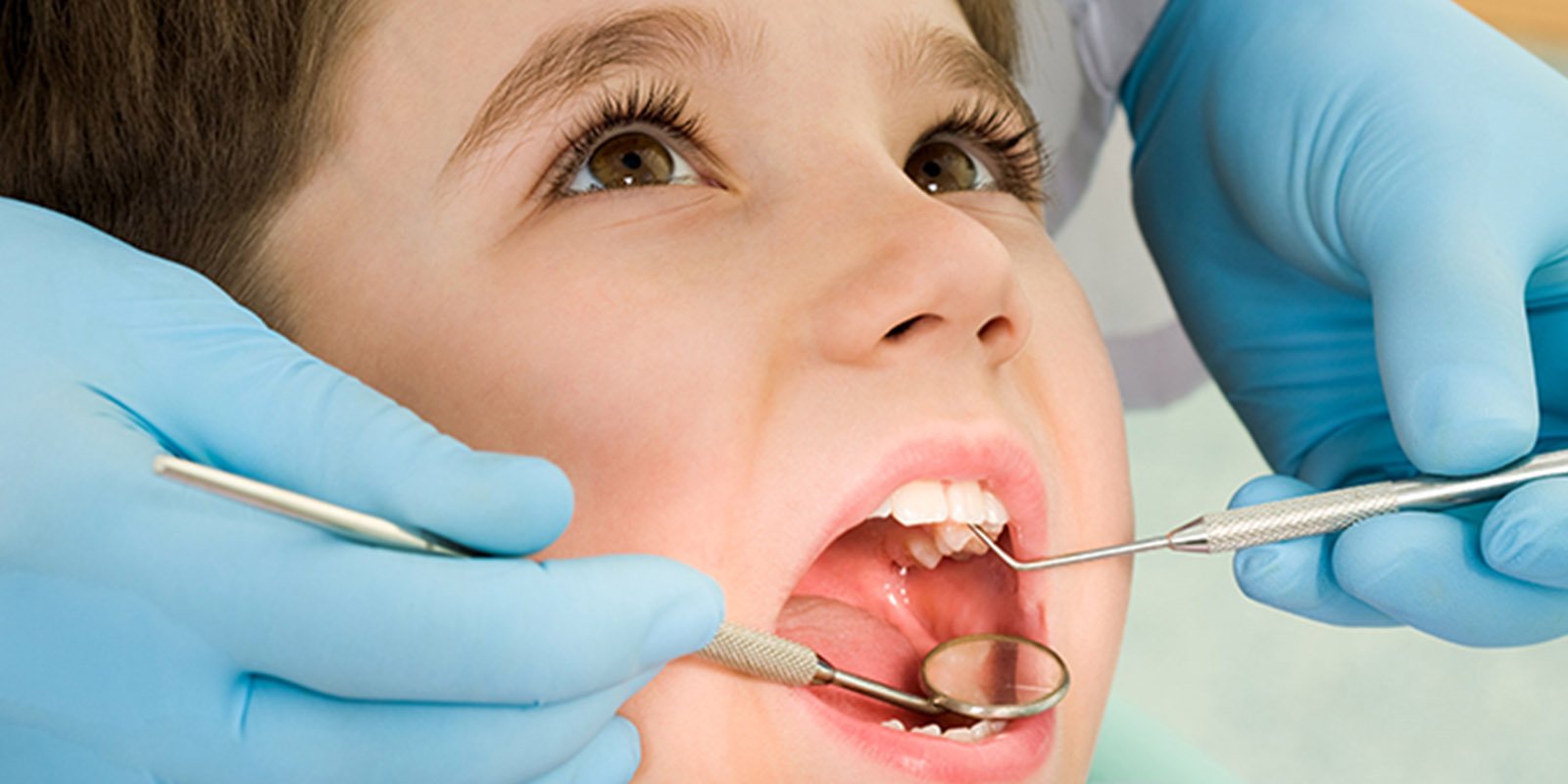
A child’s early dental visits shape how they feel about the dentist for life. At North Delhi Dental Clinic in Model Town, we make those first visits calm, gentle and reassuring:
- Led by Dr. Ankita Jindal Poddar — BDS with 15+ years of experience and a warm, patient way with children.
- Gentle, no-fear approach — especially important for your child’s first dental visit.
- Complete kids’ prevention care — fluoride, dental sealants, and early cavity treatment under one roof.
- Rated 4.8★ by 130+ happy families across North Delhi.
The best time to build good habits is now. Bring your little one in for a preventive check-up and we will guide you on feeding, brushing and protecting those precious first teeth.
Worried About Your Child’s Front Teeth?
Book a gentle check-up at North Delhi Dental Clinic, Model Town-3. Early care saves teeth.
Frequently Asked Questions
Is it OK to give my baby a milk bottle at night?
Yes — night feeds are a normal part of caring for your baby and you do not need to stop them. What matters is cleaning the mouth afterwards: give a few sips of plain water or gently wipe the teeth and gums with a clean, damp cloth after every feed. The decay comes from milk being left on the teeth all night, not from feeding itself.
Do decayed baby teeth really need treatment if they fall out anyway?
Yes. Decayed baby teeth can cause pain, infection and trouble eating, and they can damage the permanent teeth developing underneath. They also hold space for adult teeth, so losing them too early can crowd the future smile. Treating them matters.
At what age should I start cleaning my baby’s teeth?
Start even before the first tooth by wiping the gums with a clean damp cloth. As soon as the first tooth appears, brush twice a day with a tiny smear of fluoride toothpaste. Building the habit early is the best protection.
Can early baby bottle tooth decay be reversed?
At the very first stage — chalky white spots near the gum line — decay can often be halted or reversed with fluoride and better habits, before any filling is needed. This is why an early dental visit is so valuable. Once a cavity forms, it needs treatment.
How much does treatment for baby bottle tooth decay cost in Delhi?
It depends on severity. A fluoride application costs around ₹800–₹1,500, a tooth-coloured filling ₹1,000–₹2,000 per tooth, and pulp therapy or a kids’ crown ₹2,500–₹5,000 per tooth. Catching it early keeps both the treatment and the cost to a minimum.

Dr. Ankita Jindal Poddar
BDS, 15+ years of experience | IDA Member | Ex-Hindu Rao Hospital | Certificate of Implantology. Dr. Ankita leads North Delhi Dental Clinic in Model Town-3, Delhi, offering gentle, family-friendly dental care with a special focus on children’s preventive dentistry.
📍 D-2/2, Model Town-3, Delhi 110009 | 📞 +91 98106 35405